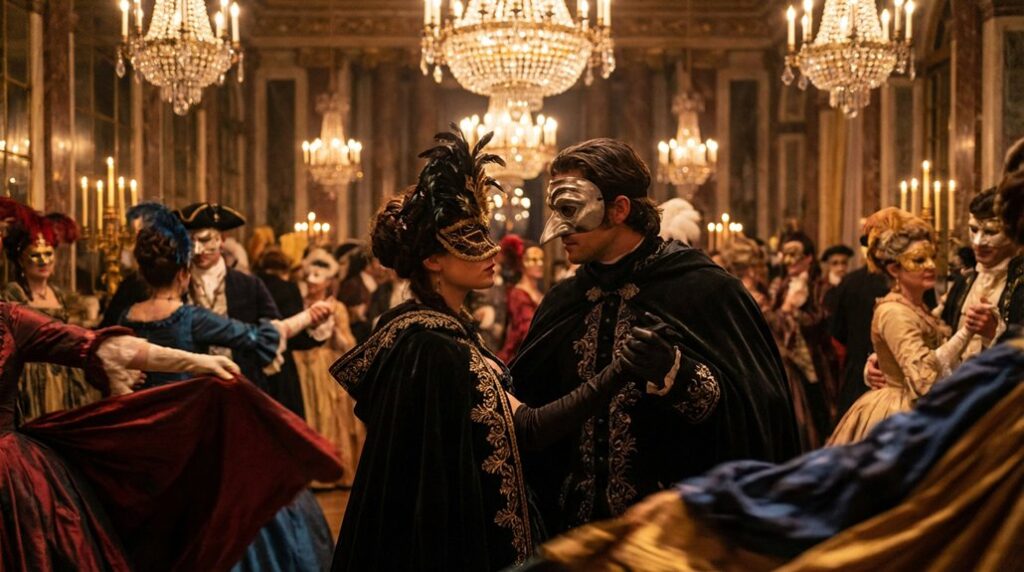
You step into the enchanting yet perilous world of Little Red Riding Hood, where I reveal how the maiden’s vibrant crimson cloak, velvet-textured and laced with 18th-century French flair, transforms from Brothers Grimm’s 1812 symbol of innocence into a beacon of audacious temptation, drawing the wolf’s primal hunger through shadowy woods inspired by 17th-century European folklore, blending vulnerability with forbidden desires in a thrilling predator-prey chase that quickens your pulse with erotic tension. As you explore further, deeper layers of power dynamics and sensory thrills await.
The fantasy
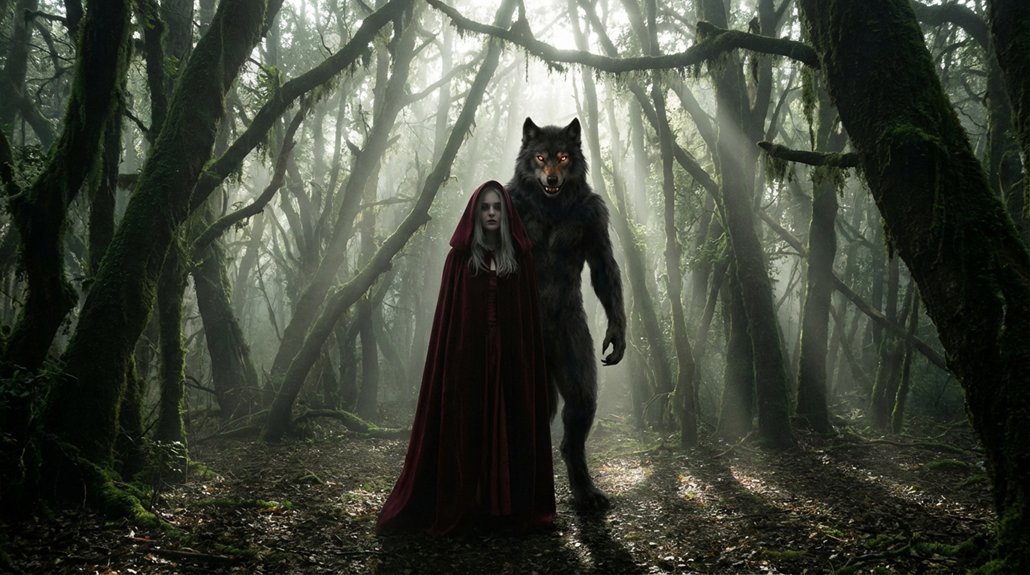
Have you ever wondered how a simple cloak, dyed in that audacious shade of crimson, transforms a naive girl into a symbol of temptation and peril in the enchanted woods? I believe you’ll feel that electric pull, you know, the one where fairy tale fantasy ignites your deepest desires, drawing you into predator prey roleplay amid shadowy trees and whispering winds. Imagine this: in Charles Perrault’s 1697 version, the maiden’s red hood, with its velvet texture and flowing cape, embodies innocence twisted into allure, a bold aesthetic that lures the wolf, his eyes gleaming with hunger, as you step into woodland roleplay, heart pounding. I’m passionate about how this setup, blending vulnerability and chase, heightens intimacy—you become the pursued, senses alive, in a dance of danger and delight, subtly humorous in its timeless tease. To enhance this allure, explore parallels with dark sexual fantasies that amplify the seductive tension in roleplay scenarios.
Setting the mood
You create the perfect atmosphere by dimming the lights and adding flickering candles, evoking the eerie forest path where Little Red first encounters danger, while soft shadows play across the room to heighten that sense of anticipation and mystery. You’re aiming for a cozy yet thrilling vibe, perhaps with string lights mimicking moonlight through trees, drawing from the tale’s 17th-century origins in European folklore where dim settings amplified suspense. For what to wear, you slip into a vibrant red cape and simple peasant dress, incorporating audacious elements like lace trims or thigh-high boots for an aesthetic that’s both innocent and alluring, blending historical authenticity with modern flair to fully immerse yourself in the role. To add an extra layer of excitement, consider exploring power dynamics in your interactions, such as one partner assuming a more commanding presence like the cunning wolf.
Atmosphere and lighting
Dim candlelight flickers in Grandmother’s cottage, casting long shadows that dance like whispers of warning, and I can’t help but feel a thrill at how Charles Perrault’s 1697 version masterfully uses such atmospheric lighting to heighten the tale’s suspense, transforming a simple woodland path into an audacious playground of peril and innocence. You sense that intimate pull, don’t you, as the dim glow accentuates every secretive glance between characters, drawing you closer into their world. In red riding hood roleplay, we embrace this aesthetic, where moonlight filters through twisted branches during a chase roleplay with the big bad wolf, building tension that’s palpable, electric, almost touchable. Historically, Perrault’s candlelit scenes evoke 17th-century French salons, intimate gatherings where tales whispered warnings about desire and danger, blending soft illumination with stark contrasts to mirror inner conflicts, like innocence yielding to cunning pursuit. Passionately, I adore how low lighting invites vulnerability, making every shadow a caress, every flicker a heartbeat in this timeless, seductive narrative.
What to wear
Imagine slipping into a crimson cloak that drapes like a forbidden promise, instantly evoking the audacious allure of Little Red Riding Hood’s iconic ensemble, which I passionately believe transforms any setting into a world of tantalizing mystery and seductive peril. You’ve got to embrace the little red costume, complete with a hooded cape from 18th-century French folklore, flowing skirt that whispers against your skin, and lace-up boots evoking woodland treks, all while stirring an intimate, fairy-tale aesthetic that heightens anticipation. For wolf roleplay, don gray fur accents, sharp-toothed masks inspired by Perrault’s 1697 tale, and rugged attire like torn shirts, claws, evoking primal hunger. I adore how these elements blend innocence and danger, creating moods where vulnerability meets raw desire, perhaps with a sly wink at the wolf’s cunning disguise—subtle, thrilling, and utterly immersive.
The scenario begins
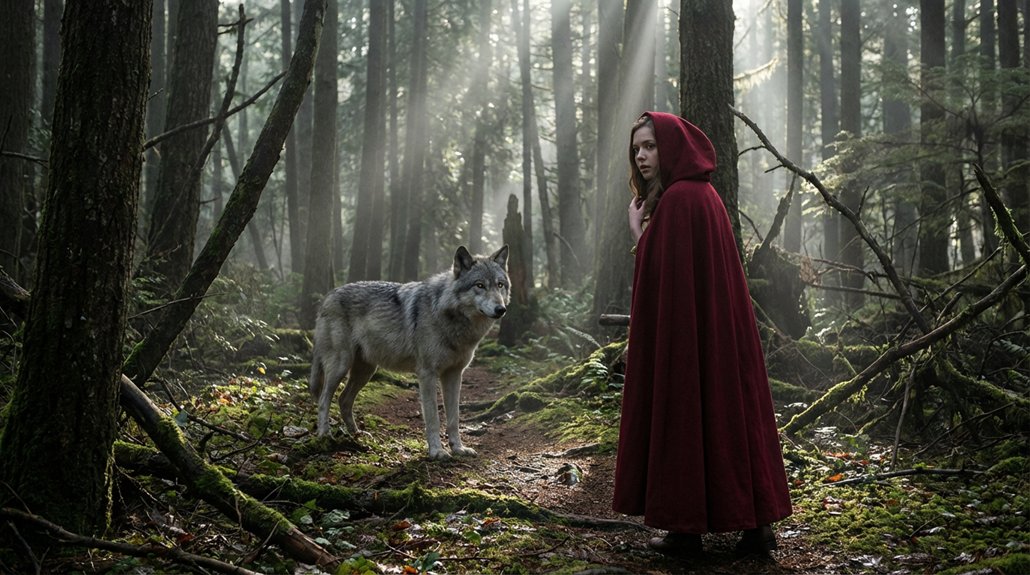
As the classic fairy tale of Little Red Riding Hood kicks off with audacious charm, I can’t help but feel thrilled by its timeless setup, where a young girl, adorned in a vibrant red hooded cape—crafted from rich velvet or wool in historical renditions like Charles Perrault’s 1697 version—ventures into the dense, shadowy woods to deliver goodies to her ailing grandmother. You step into this intimate narrative, basket in hand, the cape’s soft folds brushing your skin, evoking a sensual blend of innocence and allure that draws me closer, whispering of forbidden desires amid the ancient trees. I adore how the Brothers Grimm’s 1812 adaptation adds a familial warmth, with your mother instructing you carefully, packing wine and cake—symbols of nurture, temptation—in that wicker container, its weave textured like lovers’ entwined fingers. Passion surges as you set off, the path inviting exploration, your red aesthetic a beacon, promising encounters that stir the soul without haste. To heighten the thrill, this scenario allows us to delve into role reversal, switching between the innocent maiden and the pursuing wolf to explore fresh layers of desire and control.
Building tension
You build tension in “Little Red Riding Hood” by crafting dialogue that hints at the wolf’s deceptive charm, making every word feel loaded with unspoken threats. You incorporate body language, like the wolf’s sly leans and predatory grins, to heighten the sense of impending danger without overt action. You intensify the drama through eye contact, where the wolf’s piercing gaze locks onto Little Red, drawing her into a web of false security. To further deepen this allure, you enhance the scene with facial expressions that subtly convey the wolf’s desires and anticipation.
Dialogue that works
How does the wolf’s sly banter with Little Red Riding Hood ratchet up the suspense in this timeless fairy tale, I wonder, making our hearts pound with every exchanged word? You feel it, don’t you, that intimate thrill as he probes her path through the woods, his words dripping with audacious charm and hidden menace, blending innocence with peril in Perrault’s 1697 version where he inquires about her grandmother’s house, evoking the era’s moral warnings against strangers. I passionately believe this dialogue builds tension by layering compliments on her red velvet hood—aesthetic symbol of youthful allure, evoking 17th-century French fashion with its crimson folds and silken ties—over veiled threats, creating a dance of words that quickens your pulse, much like the Grimm brothers’ darker 1812 adaptation heightens dread through his deceptive queries, pulling you closer to the edge without a single wasted syllable, oh, the clever intimacy of it all.
Body language and eye contact
Imagine the wolf’s piercing gaze locking onto Little Red Riding Hood, that intense eye contact fueling the story’s mounting tension, as if he’s devouring her innocence with every lingering stare, drawing from Perrault’s 1697 tale where such nonverbal cues warn of strangers’ dangers in 17th-century France.
I’m utterly captivated by how you, as the reader, feel that audacious spark when the wolf leans in closer, his body language—predatory posture, subtle shifts in weight, a slight tilt of the head—building an aesthetic of forbidden desire, much like the era’s courtesans in flowing capes and hooded cloaks evading societal perils. You sense the tension escalate through his unwavering eyes, locking yours in a dance of vulnerability and power, echoing historical warnings against audacious suitors in French forests, where a maiden’s red hood symbolized both innocence and emerging sensuality, intensifying the intimate threat without a single word spoken. Isn’t it thrilling, in a sly way?
Power dynamics
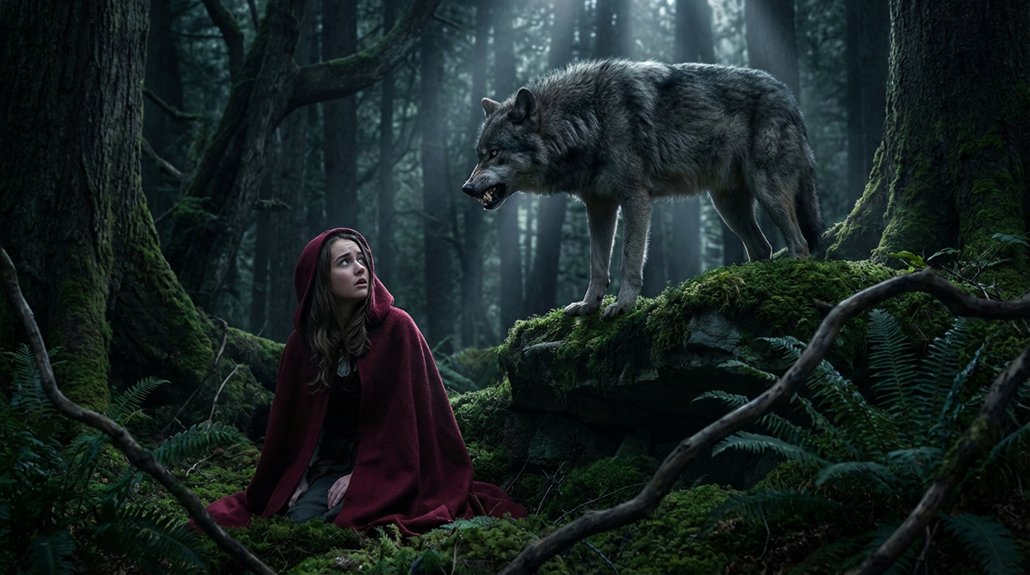
When the cunning wolf dons Grandmother’s nightcap and slips into her bed, he masterfully flips the script on vulnerability, turning a simple errand into a tense showdown of dominance, deception, and defiance that I’ve always found utterly riveting in “Little Red Riding Hood.” I can’t help but admire how Charles Perrault’s 1697 French version, with its audacious red cloak symbolizing budding womanhood and temptation, underscores the predator’s psychological edge over the naive girl, who wanders through the woods armed only with innocence, a basket of goodies, and misplaced trust. You feel that raw power shift intimately, don’t you, as the wolf’s gravelly voice and piercing gaze command submission, evoking those thrilling, forbidden desires where control tantalizes like silk against skin. In the Brothers Grimm’s 1812 adaptation, the huntsman’s heroic intervention disrupts this dynamic, restoring balance with a swift axe stroke, yet it highlights the aesthetic allure of danger, the velvet hood framing her flushed cheeks, the forest’s shadowy embrace amplifying every heartbeat of pursuit and surrender, making you crave that electric interplay of strength and yielding in your own passionate encounters. This tale’s exploration of dominance and submission parallels the Goddess worship dynamic in intimate role play, where one partner embodies authority to heighten mutual pleasure and trust.
Taking it further
You’ve felt that magnetic pull in “Little Red Riding Hood,” haven’t you, where the wolf’s predatory cunning escalates into a full-blown erotic fantasy, pushing boundaries beyond Perrault’s 1697 tale into modern retellings like Angela Carter’s 1979 “The Company of Wolves,” which I’ve always adored for its bold fusion of folklore and sensuality, complete with the girl’s red shawl fluttering like a flag of desire amid moonlit forests, thorny underbrush, and whispered seductions that blur victim and victor. You dive deeper, envisioning the wolf’s audacious gaze tracing your curves, his claws teasing lace-trimmed cloaks, velvet hoods draping over bare skin in candlelit cabins, evoking 18th-century French aesthetics with corseted waists and silken petticoats that heighten tension. I’ve thrilled at how Tanith Lee’s 1983 “Wolfland” amps this, layering psychological intimacy, forbidden touches, and breathless anticipation, making every encounter electric, profoundly personal, without a hint of restraint—pure, passionate exploration. To ensure such fantasies remain empowering and secure, always incorporate consent and communication into your roleplay scenarios.
Make it unforgettable
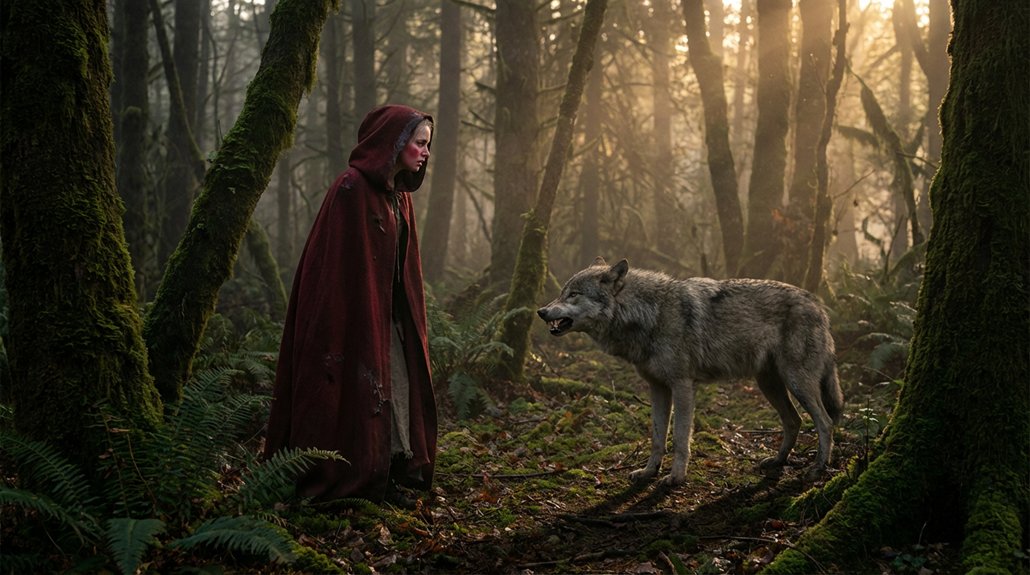
How can you elevate that wolfish encounter in “Little Red Riding Hood” from mere fantasy into an indelible memory, I wonder, by weaving in sensory details that ignite every nerve, like the crisp scent of pine needles mingling with musk in a dimly lit glade, or the soft rustle of scarlet satin against fevered skin? Imagine, as I guide you through this audacious twist on Perrault’s 1697 tale—where the wolf embodies primal desire, not mere villainy—adding tactile elements, such as the rough bark scratching your back during an embrace, or the warm breath on your neck evoking forbidden thrills from Victorian retellings. You heighten intimacy with aesthetic choices, think velvet cloaks in crimson hues inspired by 18th-century French fashion, draping over curves that pulse with anticipation, blending vulnerability and power. I’m passionate about how you layer sounds—the low growl echoing ancient folklore’s erotic undertones, perhaps a subtle chuckle lightening the intensity without diluting its depth—ensuring every moment etches itself eternally, raw and real, and to amplify this playful dynamic, blend in safe word protocols that foster trust and boundaries as explored in similar seductive scenarios.